Shipping Box Design That Survives GCC Transit
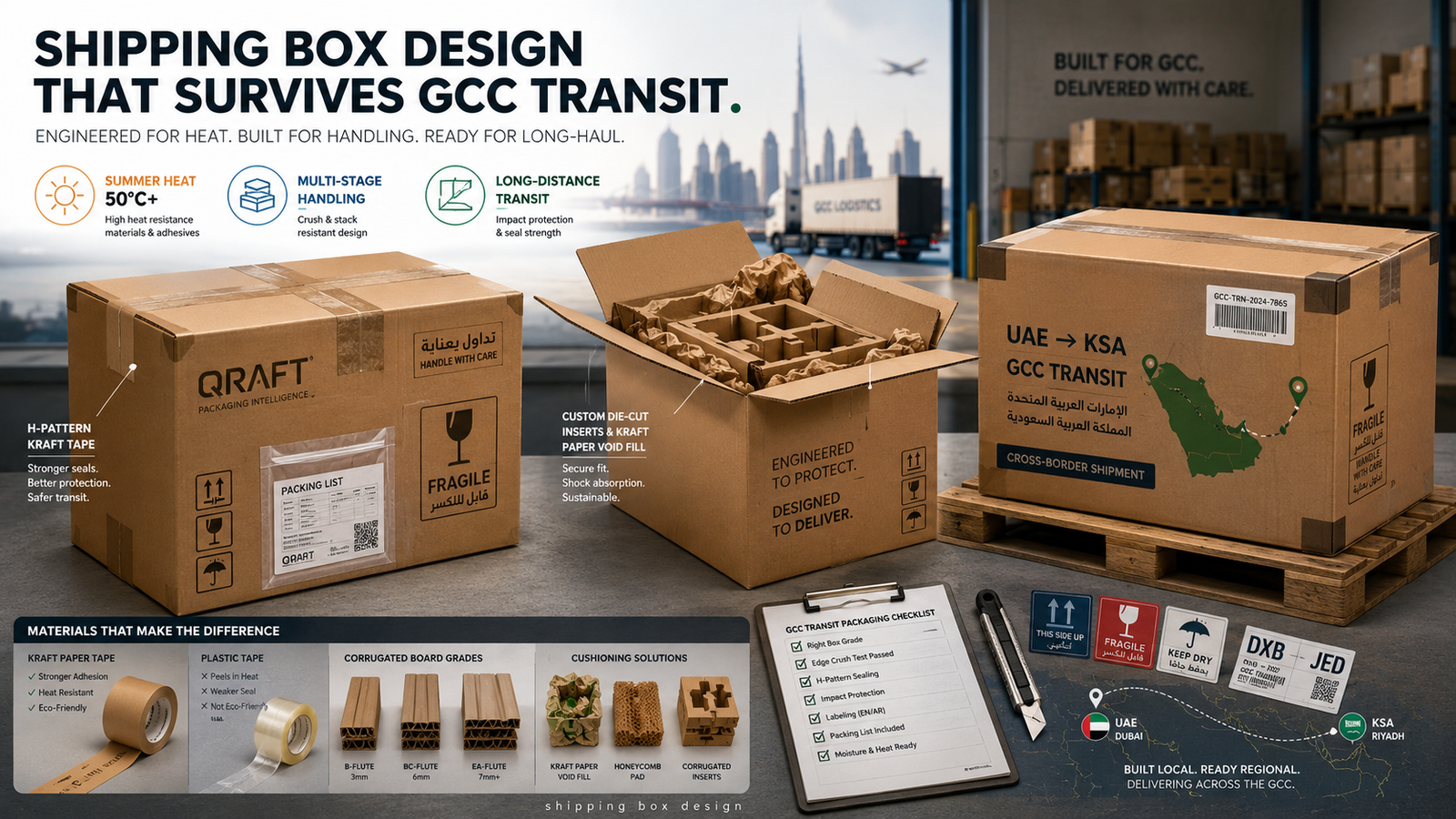
The GCC transit environment is harder on shipping boxes than most international ecommerce sellers initially assume. Cross-border shipments routinely pass through truck cabins reaching 50°C+ in summer, multi-stage handling at customs and consolidation hubs, and humid coastal-port loading docks. Shipping boxes designed for European or US ecommerce — where the courier environment is climate-controlled and gentler — fail at unexpectedly high rates in GCC routes. The boxes that survive UAE-domestic and GCC cross-border transit are the ones designed for the actual conditions: corrugated grade matched to load, paper-tape sealed, properly void-filled, and structurally tested for the specific shipping route. This guide covers the design and specification realities for shipping boxes that hold up across GCC routes.
The Three Failure Modes
Shipping boxes fail in GCC transit in three primary ways. Crush failure: insufficient corrugated grade collapses under stacked weight in trucks or warehouses. The package arrives with the box partially or fully crushed, often with internal contents damaged. Seal failure: tape adhesion fails in summer heat or humidity, the box opens in transit, contents shift or spill. Pressure-sensitive plastic tape is the most-common cause. Corner blow-out: corner stress concentrations from impact or stacking blow out box corners, exposing contents. Inadequate corner reinforcement or under-spec corrugated is the cause. Each failure mode has a specific design countermeasure.
Corrugated Grade — Match the Load
Corrugated cardboard is rated by ECT (Edge Crush Test) — the standardised measure of how much vertical pressure the box edge can resist before crushing. ECT ratings to use for typical GCC ecommerce shipping:
- 200ECT single-wall: items under 5kg, low-fragility shipments. Standard ecommerce default.
- 275ECT single-wall: 5–15kg shipments, mid-fragility items, multi-week transit routes.
- 32ECT double-wall: 15–25kg shipments, fragile or high-value items, premium gift hampers.
- 44ECT double-wall: 25kg+ shipments, heavy industrial items, multi-stack warehouse storage.
Under-speccing the corrugated grade is the single biggest mistake. A 200ECT box carrying a 12kg shipment will deform under standard truck-stacking pressure. Custom shipping boxes can be produced at any of these grades; the per-piece cost premium for stepping up from 200ECT to 275ECT is modest (5–15%) and pays for itself immediately on transit-damaged returns avoided.
Sealing Method
Three sealing methods cover the majority of UAE/GCC ecommerce shipping. H-pattern paper tape (water-activated kraft tape): the highest-reliability sealing method. The tape becomes part of the box structure, water-resistant, tamper-evident. The standard for ecommerce shipping in summer GCC heat. Pressure-sensitive plastic tape: common but unreliable in heat — adhesion can fail at sustained high temperatures. Acceptable for short-distance UAE-domestic shipments; inadvisable for multi-day GCC cross-border. Self-adhesive box closure: for premium retail-tier branded boxes with built-in tuck-flap closure. Lower transit reliability than paper tape; relies on the box structure rather than the adhesive seal.
Void Fill and Internal Protection
Internal void fill prevents contents from shifting during transit and absorbs impact energy. Three approaches work for GCC ecommerce. Kraft paper void fill: sustainable, recyclable, low cost. Adequate for most general merchandise. Air pillows or inflated cushioning: mid-tier protection for fragile items; lower environmental footprint than foam. Custom-die-cut corrugated inserts: highest protection level, particularly for shipping multi-piece personalised gift sets where each piece has a defined position. Custom inserts typically add AED 15–80 per piece depending on complexity but eliminate transit damage to a meaningful degree.
Branded Outer vs Plain Outer
Branded shipping boxes vs plain corrugated outers face a trade-off. Branded outer: reinforces brand identity at the unboxing moment, reads as premium-tier ecommerce, often handled more carefully by couriers (the brand-printed box signals “valued shipment”). Per-piece cost premium AED 3–12 over plain corrugated for printed designs. Plain outer: lowest cost, lowest brand reinforcement. Suitable for multi-marketplace fulfilment where the box is unboxed and discarded by the marketplace warehouse before reaching the end consumer. Custom packaging printing workflows handle both branded and plain outer production with the same lead times and corrugated grade options.
GCC Cross-Border Specific Considerations
For shipments going UAE-to-KSA or other GCC cross-border routes, three additional considerations apply. Summer-grade specification: step the corrugated grade up one tier above what UAE-domestic would use. A shipment that needs 200ECT for UAE-domestic should use 275ECT for KSA cross-border in summer. Bilingual EN+AR labelling: retail-facing packaging should be bilingual; outer shipping labels should identify contents in both English and Arabic for customs review. Customs-accessible documentation: commercial invoice and packing list in a clear sleeve attached to the outer box; customs inspectors who can find the documents quickly process clearances faster. UAE-to-KSA gift shipments benefit particularly from these GCC-specific considerations.
Testing the Spec Before Production
For first-launch shipping box programmes, a small pre-production test run at 25–50 pieces validates the spec before committing to bulk. Send 5–10 boxes through actual courier networks (Aramex, DHL, Emirates Post for UAE-domestic; the same plus regional partners for GCC cross-border) carrying realistic test contents (slightly heavier than typical to stress-test). Document arrival condition: any crush, seal failure, or corner blow-out. Adjust the spec before bulk production. The pre-production test costs AED 1,500–4,000 typically; the alternative (bulk production with under-spec packaging) costs orders of magnitude more in transit-damaged returns.
Common Shipping Box Mistakes for UAE/GCC Ecommerce
Five mistakes recur and compound across an ecommerce program. Defaulting to single-wall corrugated for everything: 200ECT works for items under 5kg but fails on heavier shipments. Match the corrugated grade to the actual load on each SKU. Pressure-sensitive plastic tape in summer: the cheaper sealing option that fails when truck cabin temperatures exceed 45°C. Switch to H-pattern paper tape across all summer shipments at minimum. Skipping void fill on light items: even light items shift in transit; void fill prevents the shifting that compounds into damaged contents. The cost premium is meaningful in the AED 0.50–2.00 per piece range and pays for itself on returns avoided. Reusing courier-supplied boxes for branded shipments: for D2C brands, the unboxing moment is part of the customer experience; courier-supplied plain boxes signal generic-fulfilment rather than considered-brand. Not testing the spec before bulk production: 5,000 boxes ordered without a 25-piece test run can produce 5,000 boxes that fail in transit. The pre-production test is the cheapest insurance available.
Same-Day Dubai for Stock-Design Boxes
Stock-design plain corrugated boxes (200ECT and 275ECT in standard sizes) are available for same-day Dubai pickup at Dubai facility locations. Custom-printed branded boxes cannot be produced same-day; standard 7–14 day lead time applies for printed runs of 500+ pieces. UAE-wide outside Dubai is 1–3 business days for stock-design; longer for custom-printed.
Order Yours Today
Spec shipping boxes that survive GCC transit.
ECT-rated corrugated matched to load, H-pattern paper tape sealing, branded or plain outer, custom-die-cut inserts for premium pieces — bulk pricing from 500 pieces, GCC cross-border ready.
Same-day Dubai delivery for orders placed before 11am (12pm for UV-printed items). UAE-wide delivery 1–3 business days. GCC cross-border 7–14 days. Order via WhatsApp or our online form.
Frequently Asked Questions About Shipping Box Design GCC
What is the most common shipping box failure mode in GCC transit?
Three primary failure modes: crush failure (insufficient corrugated grade collapses under stacked weight), seal failure (tape adhesion fails in summer heat or humidity), and corner blow-out (impact stress on inadequately reinforced corners). Each has specific design countermeasures — corrugated grade matching load, paper tape sealing, and adequate corner reinforcement.
What ECT corrugated grade should I use for GCC ecommerce shipping?
200ECT single-wall for items under 5kg (standard ecommerce default). 275ECT single-wall for 5–15kg (mid-fragility, multi-week transit). 32ECT double-wall for 15–25kg (fragile or high-value, premium gift hampers). 44ECT double-wall for 25kg+ (heavy industrial, multi-stack warehouse). Under-speccing is the single biggest packaging mistake.
Should I use paper tape or plastic tape for GCC ecommerce sealing?
H-pattern paper tape (water-activated kraft tape) for ecommerce shipping in summer GCC heat — highest reliability, tamper-evident, becomes part of the box structure. Pressure-sensitive plastic tape can fail at sustained high temperatures and is inadvisable for multi-day GCC cross-border. Acceptable for short UAE-domestic shipments only.
Are branded shipping boxes worth the premium over plain corrugated?
For D2C brands shipping direct to consumers, yes — branded outer boxes reinforce brand identity at unboxing, read as premium-tier ecommerce, and are often handled more carefully by couriers. Per-piece premium AED 3–12 over plain corrugated. For multi-marketplace fulfilment (Amazon FBA, Noon FBN) where the marketplace unboxes and discards the outer, plain corrugated is the cleaner choice.
What corrugated grade should I use for UAE-to-KSA cross-border shipping?
Step up one tier above the UAE-domestic specification for GCC summer cross-border. A shipment that needs 200ECT for UAE-domestic should use 275ECT for KSA in summer. The added stress of multi-day truck transit through GCC summer heat warrants the upgraded specification.
Should I test my shipping box spec before bulk production?
Yes — for first-launch shipping box programmes, run a 25–50 piece pre-production test with 5–10 boxes through actual courier networks. Document arrival condition: any crush, seal failure, or corner blow-out. Pre-production test costs AED 1,500–4,000; bulk production with under-spec packaging costs orders of magnitude more in transit-damaged returns.
What void fill works for GCC ecommerce shipping?
Kraft paper void fill (sustainable, recyclable, low cost — adequate for most general merchandise), air pillows (mid-tier protection, lower environmental footprint than foam), or custom-die-cut corrugated inserts (highest protection, particularly for multi-piece personalised gift sets). Custom inserts add AED 15–80 per piece but eliminate transit damage on premium pieces.
Is there a minimum order for custom-printed branded shipping boxes?
Bulk pricing applies from 500 pieces for custom-printed branded boxes. Below 500 pieces, single-piece and small-run rates apply. Stock-design plain corrugated boxes have no minimum and are available same-day Dubai for pickup at facility locations.