Religious Celebration Gifts UAE: Christmas, Diwali, Eid Combined Households
UAE households often span multiple faith traditions — interfaith marriages, expat families with members of different religions, friend groups celebrating across traditions, corporate teams with mixed religious backgrounds. The country’s open, multi-cultural environment is one of its defining features, and gift-giving across the major celebrations of the year is one place this shows up most practically. This guide covers gifts that work across Christmas, Diwali, Eid (al-Fitr and al-Adha), and other religious celebrations, with the etiquette considerations and personalisation patterns that respect each tradition without privileging one.
The UAE Multifaith Reality
UAE households frequently celebrate multiple religious traditions as a matter of normal life. An Indian-Filipino couple may observe Diwali and Christmas together. A British-Emirati family may exchange gifts across both Christmas and Eid. A friend group may have Muslim, Christian, Hindu, and Sikh members and gift across each tradition’s calendar. The point of multifaith gift-giving in UAE is not to flatten the differences between traditions but to recognise each one specifically. The cleanest approach is to gift on each celebration’s actual date with content appropriate to that tradition, rather than producing a generic blended gift that satisfies none of them.
Combined Christmas + Diwali + Eid Households
For households that observe more than one major celebration, three gifting patterns work cleanly.
Per-celebration gifts on each date
Gift on the actual date of each celebration — Christmas gifts on December 25, Diwali gifts in October-November (date varies), Ramadan gifts during Ramadan and Eid al-Fitr at its end. Each gift acknowledges that specific tradition. Higher cost across the year but cleaner respect for each celebration’s distinct character.
Symbol-neutral gifts that work across traditions
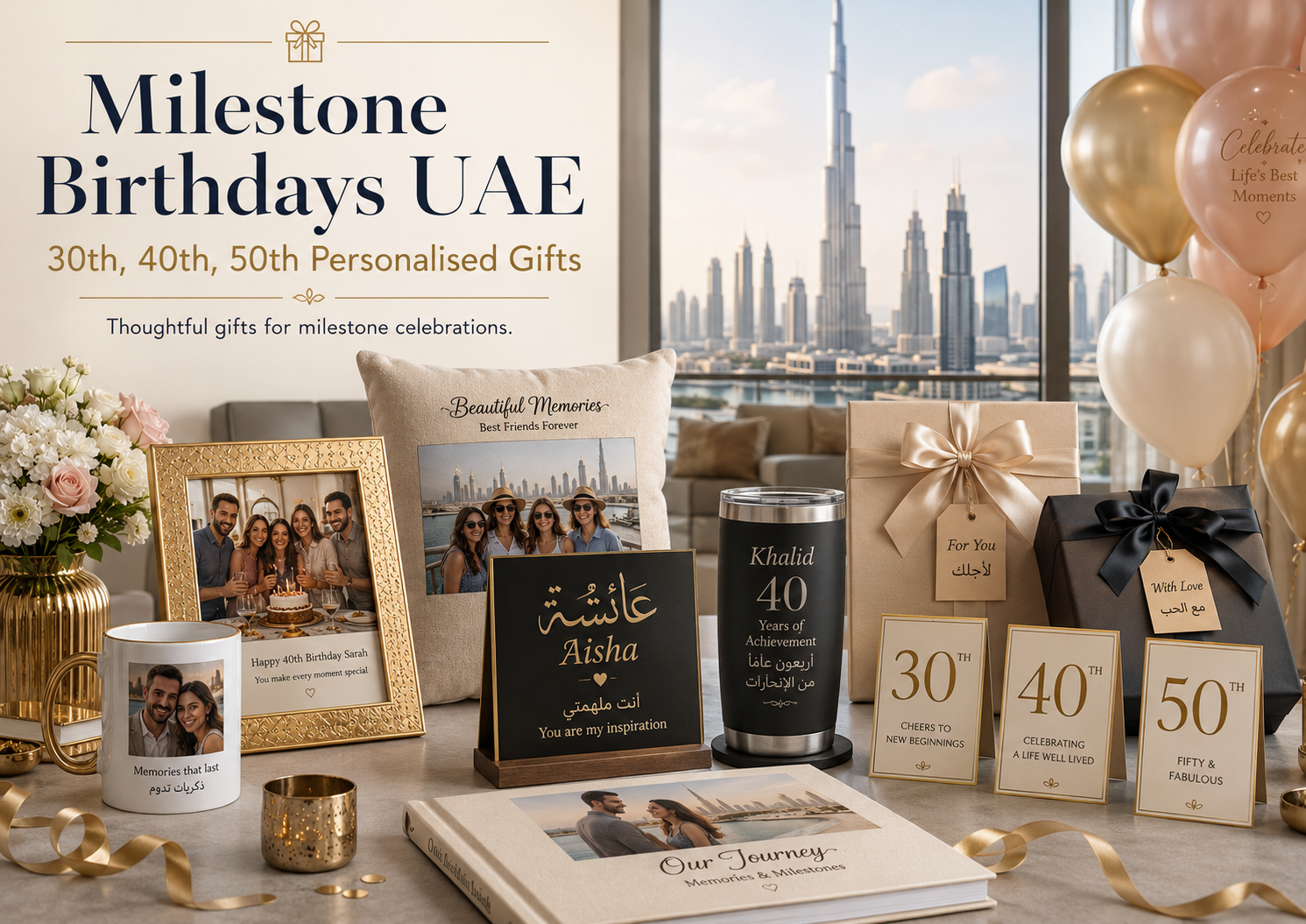
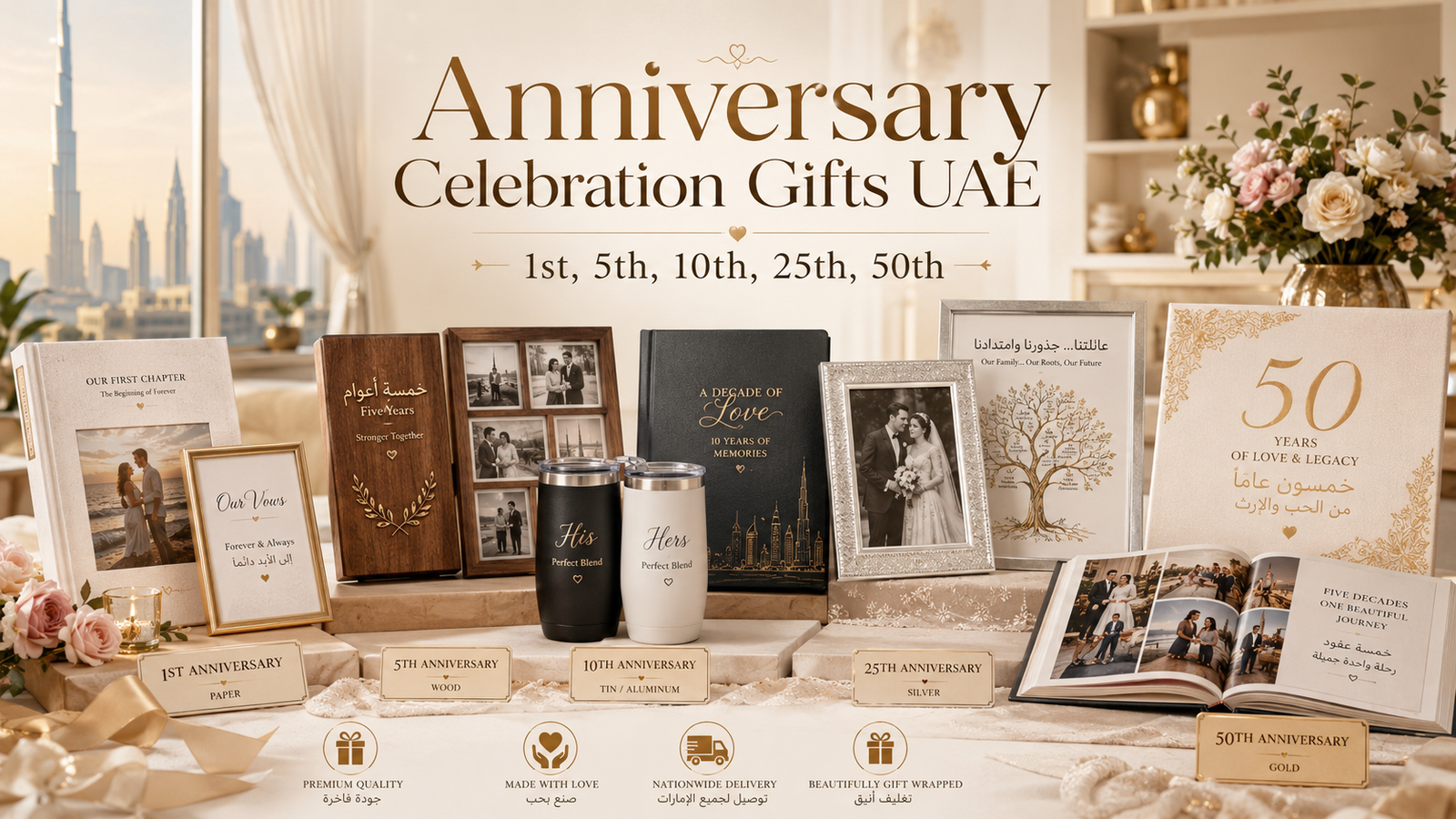
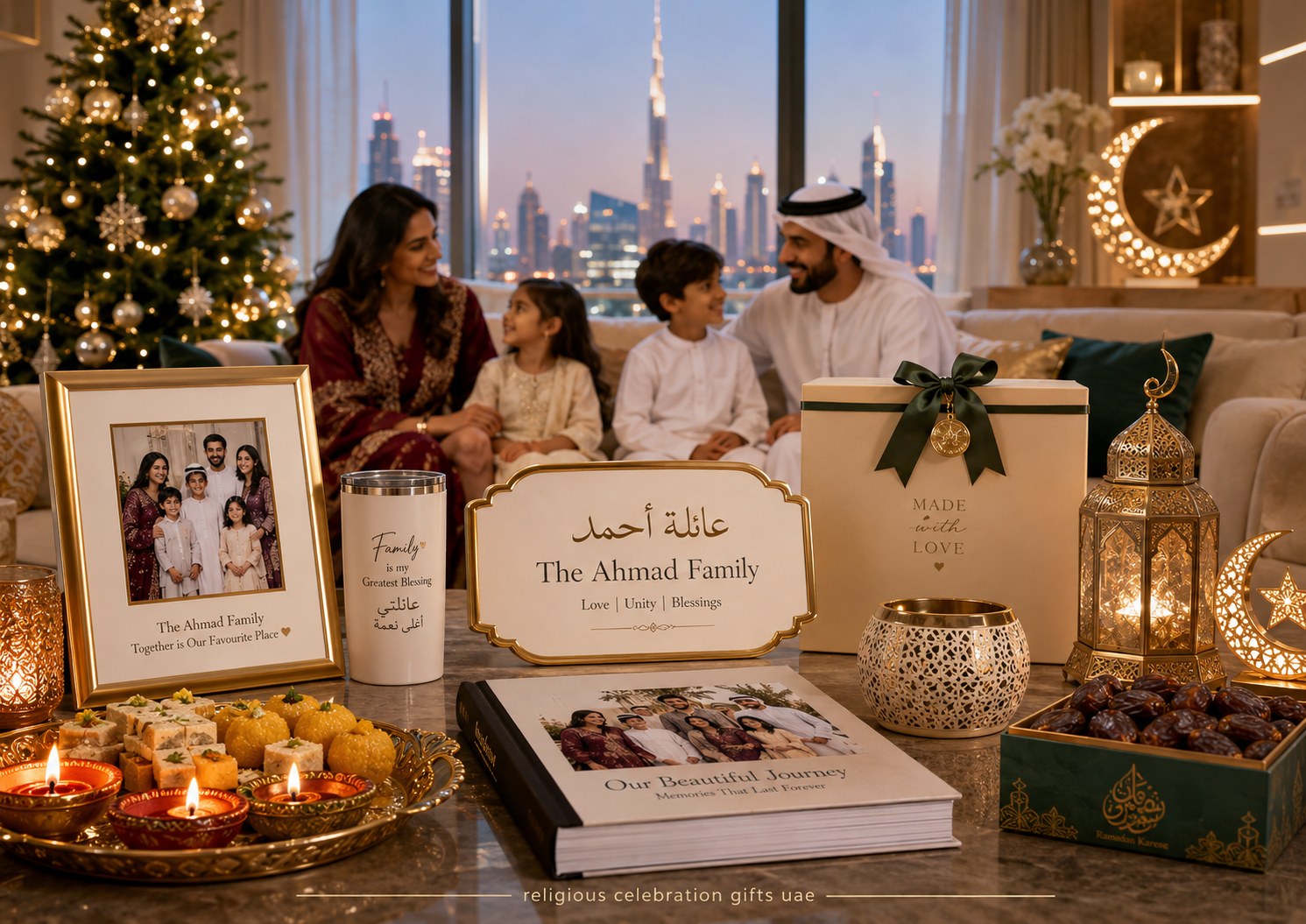
Some gift categories work across virtually any religious celebration without favouring one. Personalised photo frames with family portraits and the recipient’s name (no religious symbols) work for Christmas, Diwali, Eid, and beyond. Personalised photo frames are particularly useful here because the personalisation is the gift, not the religious context. Bilingual EN+AR name plaques, family-name canvases, and personalised home items all work across traditions.
Tradition-specific gifts honoured carefully
For households where one member primarily observes a specific tradition, gift on that tradition’s date with content appropriate to that tradition. A Christmas gift for the Christian member of an interfaith family; a Diwali gift for the Hindu member; an Eid gift for the Muslim member. Each tradition’s gift is for the person observing that tradition specifically, not as a household-wide gesture.
Gift-Giving Etiquette for Mixed-Faith Households
Three etiquette principles apply across UAE multifaith contexts. Don’t substitute generic for specific. A “happy holidays” gift attempting to cover Christmas and Diwali in one gesture often lands worse than gifts on each celebration’s actual date. Specificity is respect. Avoid religious symbols on gifts that may go to recipients of other faiths. Crosses, Om symbols, crescents, and other religious markers are appropriate for gifts within that tradition but should not appear on gifts going across faith lines. Personalisation works across traditions. The recipient’s name in bilingual EN+AR, a family photo, or a memory-based gift carries meaning regardless of religious context.
Symbol-Neutral Gift Categories
Personalised photo gifts
Photo frames, photo cushions, photo mugs, and photo books — all work across religious traditions because the personalisation (the photo, the names) is the content, not the religious framing. For mixed-faith family gifts, photo-based gifts are the highest-survival category.
Bilingual name plaques and home items
Family name canvases, home-blessing plaques (with secular or universal-faith blessings rather than tradition-specific verses), and personalised home accessories work across faiths. Naskh and Modern Arabic are the most-used Arabic styles for home items in mixed-faith households; Diwani for ceremonial pieces.
Premium drinkware and accessories
Personalised tumblers, mugs, water bottles, and notebooks — practical gifts that slot into daily routines regardless of religious context. The personalisation (recipient’s name, family monogram) carries the gift.
Premium dates and culturally-specific edible gifts
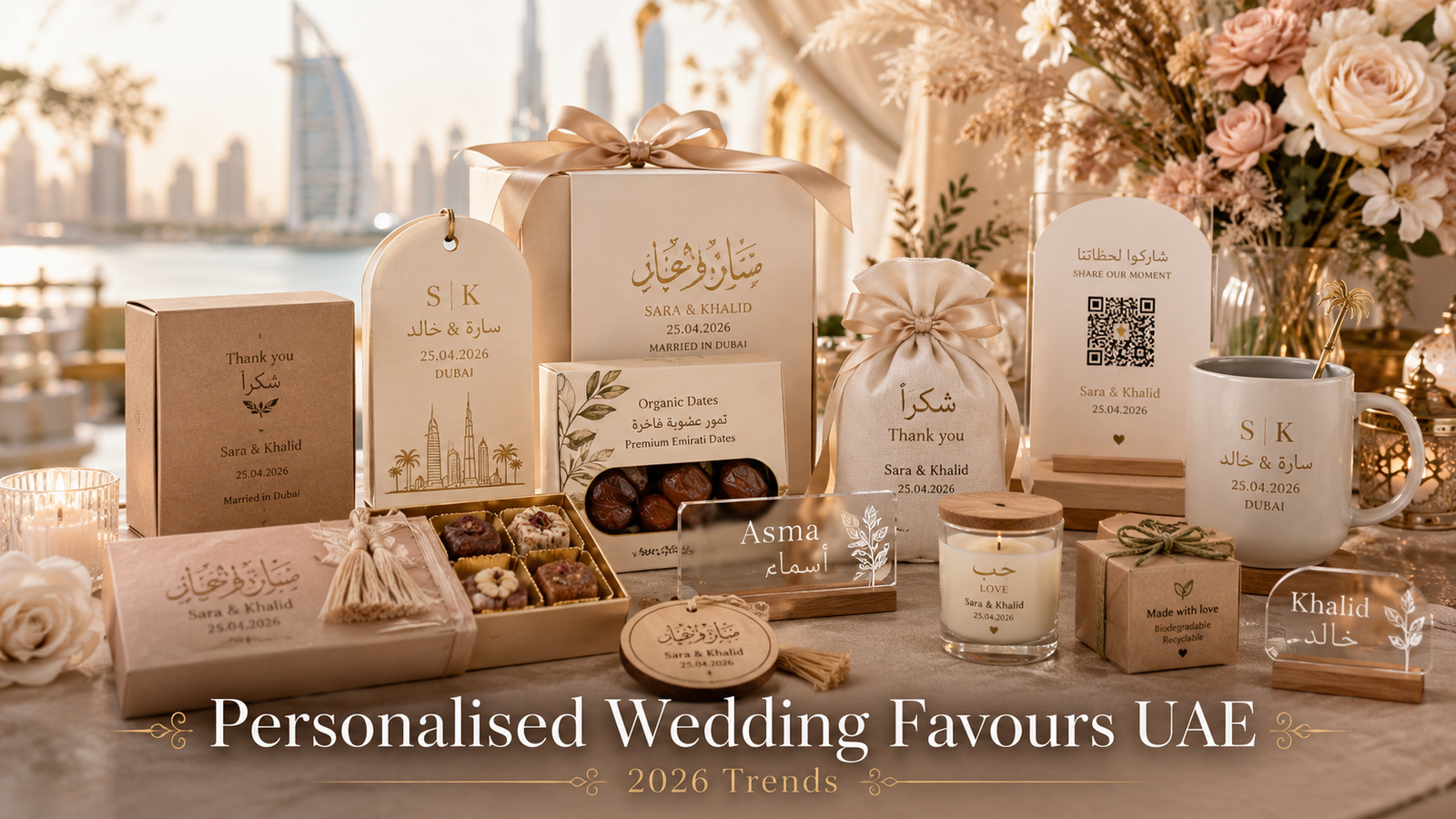
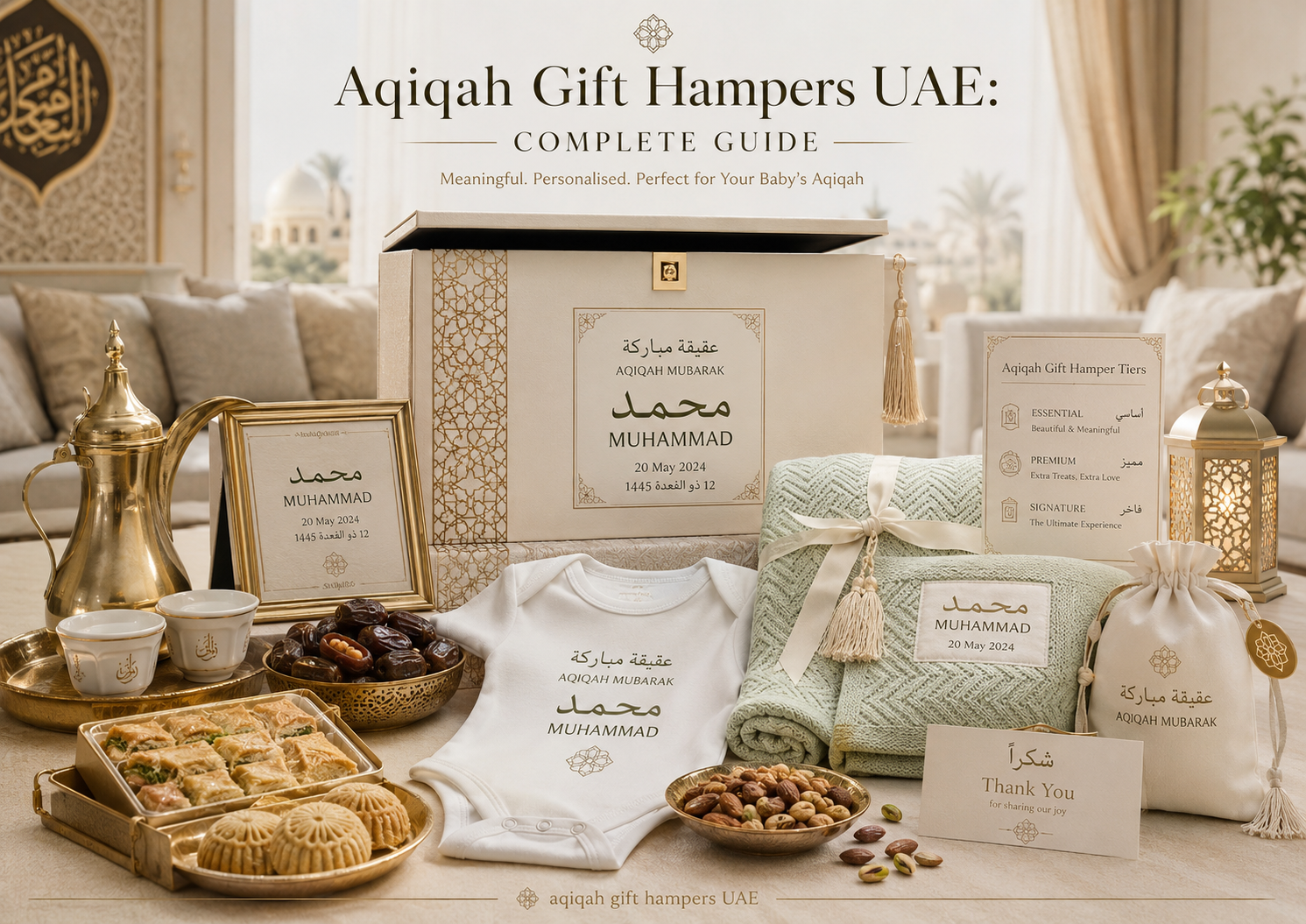
Premium dates work across UAE gift contexts because they carry cultural rather than narrowly religious meaning. Premium kunafa and ma’amoul boxes are appropriate across Christmas, Diwali, and Eid contexts in UAE because the regional cultural framing translates across recipient demographics.
Major UAE Religious Celebrations Through the Year
For households planning their gifting calendar across multiple traditions, knowing the timing helps. Eid al-Fitr arrives at the end of Ramadan (typically March-April depending on the lunar calendar). Eid al-Adha arrives roughly two months later (typically May-June). Diwali typically falls in October or November depending on the lunar Hindu calendar. Christmas on December 25. Easter in March-April (Western Christian) or April-May (Orthodox). Vesak (Buddhist) typically in May. Sikh Vaisakhi on April 13-14. UAE multifaith households typically gift across the 2–4 celebrations most relevant to their household members; gifting across all major traditions is unusual and unnecessary.
Common Mistakes in Multifaith Gift-Giving
Four mistakes recur on UAE multifaith gift programs and are easily avoided.
Generic blended celebrations
“Happy Holidays” gifts that try to cover Christmas, Diwali, and Eid simultaneously usually land worse than per-celebration gifts on the actual dates. Specificity is part of the meaning; flattening dilutes the gesture.
Religious symbols where they don’t belong
A Christmas tree on a gift going to a Muslim or Hindu recipient. A diya lamp graphic on a gift going to a non-Hindu recipient. Religious symbols are appropriate only for gifts within that tradition.
Quranic verses on non-Muslim recipient gifts
Even when the verse is broadly meaningful (peace, family, blessing), Quranic content is appropriate only for Muslim recipients. Use secular blessings or culturally-neutral text instead. The typography specialist review process catches this kind of mismatch.
Forgetting to gift on a celebration the recipient actually observes
If you’ve gifted a Christian friend on Christmas for years and then suddenly stop, the omission is noticed. Maintain the gifting cadence consistent with what the recipient actually observes; new traditions can be added but established ones should not be dropped without context.
Bilingual Personalisation in Multifaith Contexts
Bilingual EN+AR personalisation works as a default across multifaith UAE households because Arabic is the regional cultural language rather than a faith-specific language. The Arabic component on a multifaith gift signals UAE-context awareness, not religious framing. Naskh and Modern Arabic are the most-used styles for everyday multifaith gifts; Diwani for ceremonial pieces. Avoid using Quranic verses on gifts going to non-Muslim recipients; use secular blessings, family names, or memory-based content instead. Every Arabic layout is reviewed by a typography specialist before production.
Same-Day Dubai and Cross-Border
For UAE multifaith households needing gifts across multiple celebration calendars (Christmas in December, Diwali in October-November, Eid varying), same-day Dubai delivery handles last-minute orders with an 11am cut-off for sublimated and fabric items and a 12pm cut-off for UV-printed pieces. There is no minimum order; UAE-wide is 1–3 business days; GCC cross-border 7–14 days for gifts shipping to family members in KSA, Oman, Kuwait, or Bahrain.
Order Yours Today
Gift across UAE multifaith households with respect for each tradition.
Personalised photo frames, family-name canvases, bilingual home plaques, premium drinkware — symbol-neutral options for Christmas, Diwali, Eid, and beyond.
Same-day Dubai delivery for orders placed before 11am (12pm for UV-printed items). UAE-wide delivery 1–3 business days. GCC cross-border 7–14 days. Order via WhatsApp or our online form.
Frequently Asked Questions About Multifaith Gifts UAE
How do I gift across a multifaith UAE household?
Three patterns work: gift on each celebration’s actual date with tradition-appropriate content (cleanest respect for each), use symbol-neutral personalised gifts that work across traditions (lowest coordination), or gift tradition-specific items to specific household members (for households where members primarily observe one tradition). Specificity beats generic blending.
What gifts work across Christmas, Diwali, and Eid?
Symbol-neutral personalised gifts: photo frames, photo cushions, family-name canvases, bilingual EN+AR home items, premium drinkware. The personalisation (names, photos) is the gift; the religious context does not need to be the framing. Premium dates and regional sweets also work culturally across UAE contexts.
Should I avoid religious symbols on gifts going to recipients of other faiths?
Yes — crosses, Om symbols, crescents, and other religious markers are appropriate for gifts within that tradition but should not appear on gifts crossing faith lines. Personalisation with names, photos, or secular blessings carries the gift without religious framing.
Can bilingual EN+AR personalisation be used in multifaith UAE households?
Yes — Arabic is a regional cultural language in UAE rather than a faith-specific language. Bilingual EN+AR personalisation signals UAE-context awareness across all faith backgrounds. Naskh and Modern Arabic are the most-used styles for everyday multifaith gifts; Diwani for ceremonial pieces. Avoid Quranic verses on gifts to non-Muslim recipients.
Is a single ‘happy holidays’ gift appropriate for multifaith households?
Generally no. A generic gift attempting to cover multiple traditions often lands worse than per-celebration gifts on each actual date. Each tradition’s specificity is part of the meaning; flattening them dilutes the gesture. Better to gift on each celebration’s date with appropriate content for that tradition.
What is the most-given multifaith gift category in UAE?
Personalised photo gifts (frames, cushions, mugs) — the personalisation is the content, not the religious context. Family-name canvases and home-blessing plaques (with secular blessings) come second. Premium drinkware with bilingual personalisation works as a year-round multifaith default.
Can I send multifaith gifts across the GCC?
Yes — GCC cross-border delivery to KSA, Oman, Kuwait, and Bahrain is 7–14 days. Personalisation is produced in Dubai before shipping. The same symbol-neutral gift principles apply for cross-border gifts to mixed-faith family or friend groups.
Is there a minimum order for personalised multifaith gifts?
No — single-piece personalised gifts are produced at the Dubai facility with no minimum and no setup fee.