
Gulf Wedding Gift Traditions: A Regional Guide
Gulf wedding gift traditions span six GCC countries (Saudi Arabia, UAE, Bahrain, Oman, Kuwait, Qatar) and substantial regional sub-traditions within each country — Najdi vs Hijazi traditions in Saudi Arabia, Emirati vs broader UAE expatriate traditions, distinctive Omani heritage traditions, Bahraini pearling-heritage traditions, Kuwaiti diwaniya-culture traditions, Qatari Bedouin-heritage traditions. The substantive cultural depth of Khaleeji wedding traditions means wedding gift programmes that respect regional traditions thoughtfully sit at substantively higher cultural-resonance register than generic gift programmes. For UAE-context wedding gift programmes serving the multi-national GCC recipient base, regional-tradition awareness shapes everything from gift category selection through personalisation conventions through cultural-context framing. This guide covers the substantive Khaleeji wedding traditions, regional variations across GCC, gift category considerations, personalisation conventions, and budget tiers for Gulf wedding gift programmes at every register from individual personal gifts through substantial wedding-favour bulk programmes.
The Substantive Khaleeji Wedding Tradition
Three principles anchor the substantive Khaleeji wedding tradition. The multi-day celebration: traditional Khaleeji weddings span multiple days with distinct ceremony components — the milcha or katb el ketab (Islamic marriage contract signing), the henna night (laylat el henna), the bride’s preparation rituals, the wedding feast (waleemah), and the family-celebration days following. Each component carries distinct gift and favour traditions. The gender-separated celebration register: traditional Khaleeji weddings operate with substantial gender-separated celebration register — separate men’s and women’s celebrations, with the bride’s celebration register particularly substantive among women family and friends. Gift programmes acknowledge this celebration register with appropriately-gendered gift considerations where relevant. The substantial family and community register: Khaleeji weddings emphasise extended family and tribal/community connection — substantial guest lists (often 200-1000+ guests across multi-day celebrations), substantial family gift exchange, and substantial community gift register. The gift programmes scale to match this register.
Wedding Favour Traditions Across GCC
Emirati and broader UAE wedding favours
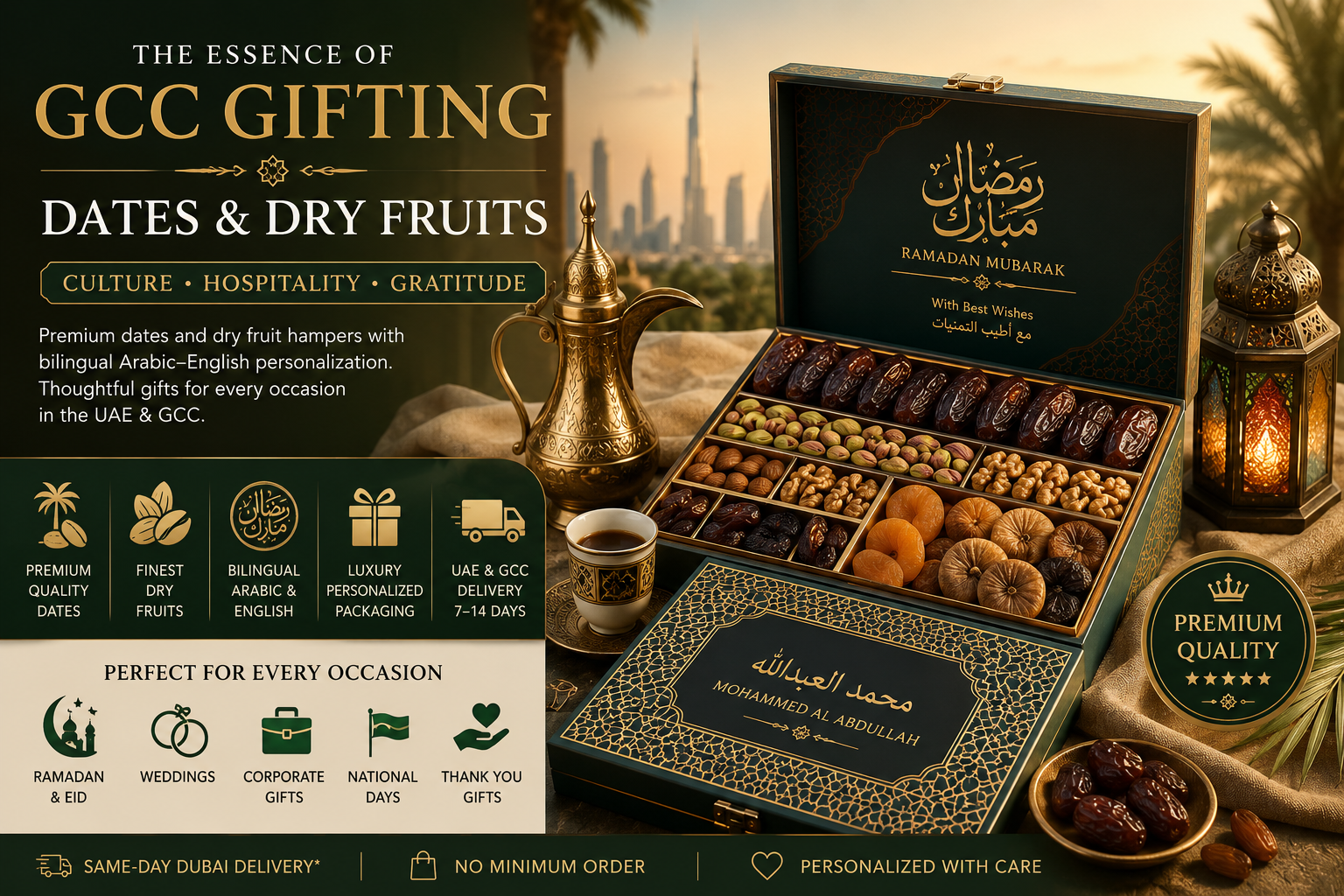
Emirati wedding favours emphasise restrained luxury, premium dates assortments (often with mini dates gift boxes for each guest), premium personalised perfume or oud samples, premium personalised name-card gifts, premium personalised Arabic calligraphy gifts. The wedding favours UAE range covers UAE-context Emirati and broader UAE wedding favour categories at production scale.
Saudi wedding favours
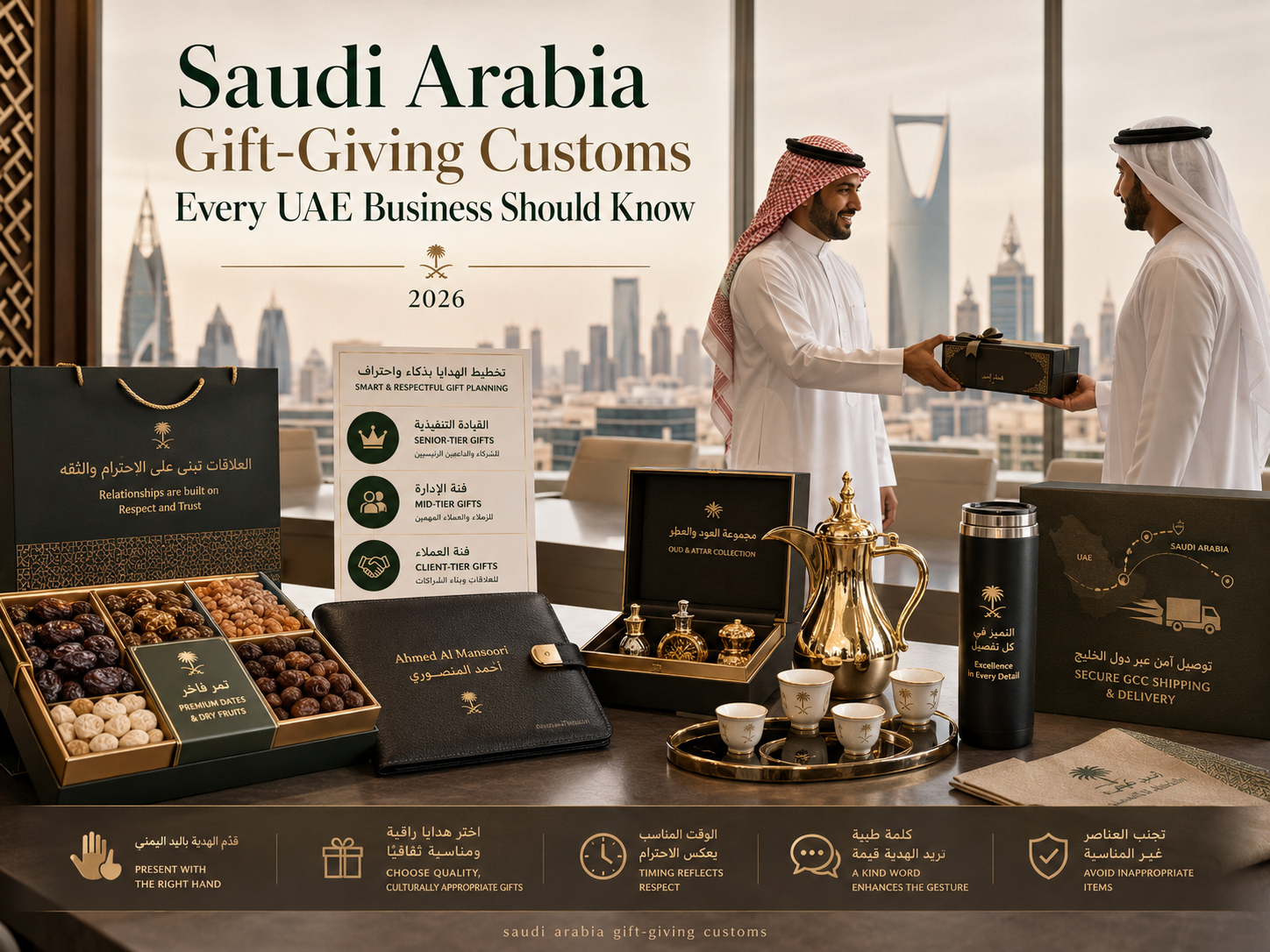
Saudi wedding favours emphasise substantial premium gifts at guest register, particularly in the Najdi-tradition that retains substantive Saudi cultural-register conventions — premium dates assortments, premium Arabic perfume in elegant bottles, premium personalised gold-foil gift items, premium personalised heritage-design favours. Najdi tradition favours emphasise palm tree motifs and traditional design language; Hijazi tradition favours emphasise more cosmopolitan design. The wedding favours Saudi Arabia range covers Saudi-context wedding favour categories.
Bahraini wedding favours
Bahraini wedding favours often integrate pearling-heritage design elements (Bahrain has substantive pearling tradition heritage) — premium personalised pearl-themed favours, premium personalised mini pearls gift items, premium personalised Bahraini-heritage design favours. The Bahraini wedding tradition register sits at substantive cultural-respect register with elevated personalisation for senior-relationship guests.
Omani wedding favours
Omani wedding favours emphasise substantive Omani heritage design — premium personalised Omani frankincense (Bukhoor) gifts, premium personalised Omani handicraft items, premium personalised mini Khanjar (traditional dagger) decorative gifts, premium Omani-heritage design favours. Omani wedding tradition register integrates distinct Omani cultural identity rather than generic Khaleeji register.
Kuwaiti wedding favours
Kuwaiti wedding favours integrate diwaniya-culture register — substantial guest engagement traditions, premium personalised Kuwaiti-heritage design favours, premium personalised mini dates gift items, premium personalised Arabic coffee or specialty gift items. The Kuwaiti wedding tradition sits at substantive Khaleeji register with distinct Kuwaiti cultural-context elements.
Qatari wedding favours
Qatari wedding favours emphasise Bedouin-heritage register — premium personalised Qatari-heritage design favours, premium personalised mini Arabic coffee gift items, premium personalised falcon or desert-heritage themed gifts (particularly for senior-recipient register), premium Qatari-tradition design favours.
The Henna Night Tradition (Laylat el Henna)
Laylat el Henna (the henna night) is one of the most-substantive ceremony components of traditional Khaleeji weddings — the night before the wedding ceremony when the bride’s hands and feet are decorated with intricate henna designs by family women, accompanied by traditional songs, dances, and women’s celebration. Gift traditions for laylat el henna sit at distinct register. Gifts for the bride at henna night: premium personalised gold or pearl jewellery from family women, premium personalised silk or traditional fabric gifts, premium personalised Arabic perfume gifts. Favours for henna night guests: small personalised gifts distributed to attending family women — premium personalised mini perfume bottles, premium personalised mini dates gift items, premium personalised henna-themed favours. Henna-night specific design register: traditional Arabic geometric design elements, henna-inspired floral motifs, traditional Khaleeji wedding design language. The wedding gifts UAE broader range covers henna-night specific gift categories alongside main-ceremony wedding favours.
The Milcha and Katb el Ketab Tradition
The milcha (Emirati Muslim) or katb el ketab (broader Arab Muslim) is the Islamic marriage contract signing — the religious-legal ceremony component that constitutes the actual marriage in Islamic tradition, often held separately from the wedding feast and celebration days. Gift register for milcha differs from broader wedding-celebration gift register. Milcha gifts for the couple: premium personalised gifts of religious-respect register — premium personalised Quran editions, premium personalised prayer accessories, premium personalised Islamic calligraphy art pieces. Family gifts at milcha: exchange of substantial personalised family gifts between bride’s and groom’s families — premium personalised heirloom-quality gifts. Milcha-specific design register: Islamic calligraphy (particularly Thuluth and Diwani styles), Islamic geometric patterns, dignified design treatment matching the religious-ceremony register. The milcha and wedding feast register differ substantially — milcha is dignified-religious, wedding feast is celebratory.
Bilingual EN+AR Personalisation for Khaleeji Wedding Programmes
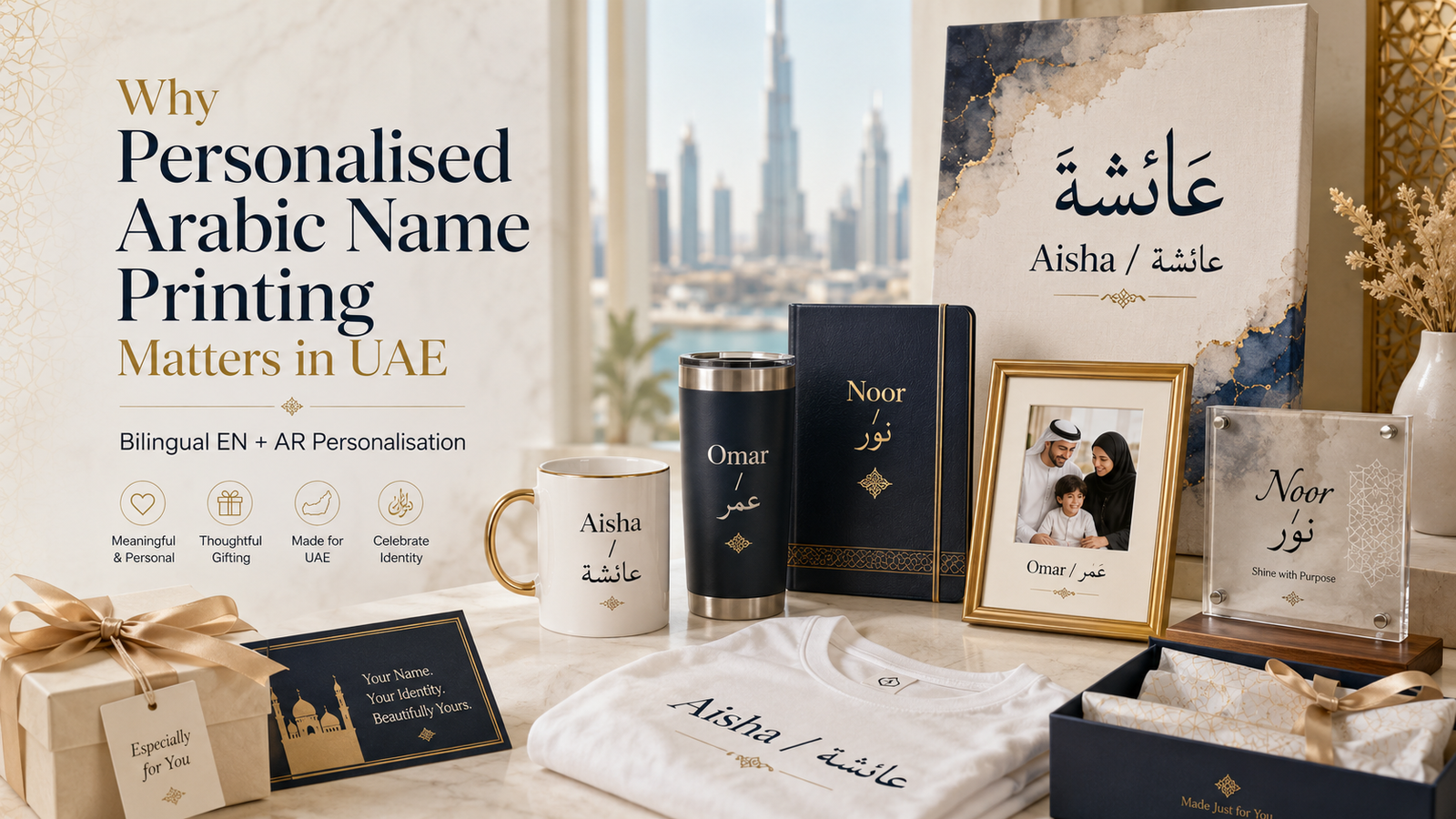
Khaleeji wedding gift programmes typically operate at Arabic-primary personalisation register given the substantive Arab-cultural context. Couple names in Arabic primary: the bride and groom names in Arabic calligraphy are the substantive personalisation elements on wedding favours and gifts. Wedding date in Arabic Hijri calendar: for substantively-traditional Khaleeji weddings, the wedding date may be expressed in Hijri (Islamic) calendar alongside or in place of Gregorian calendar. Wedding greetings in Arabic: ‘Mabrouk’ (مبروك — congratulations), ‘Mabrouk az-zawaj’ (مبروك الزواج — congratulations on the marriage), or ‘Allah yebarek lakum’ (الله يبارك لكم — may God bless you both) — all appropriate variants. Arabic typography style: Diwani for senior-recipient and senior-celebration wedding favours; Thuluth for heirloom-tier and premium senior-relationship wedding gifts; Naskh for everyday wedding favour personalisation. Najdi-tradition design elements for Najdi-context weddings; Hijazi design elements for Hijazi-context weddings. Every Arabic layout reviewed by typography specialist with regional cultural-context awareness.
Budget Tiers for Gulf Wedding Gift Programmes
Four tiers shape Gulf wedding gift programme planning. Guest-distribution favour tier: AED 15-50 per favour for distribution across substantial Khaleeji wedding guest bases (200-1000+ guests). Premium personalised mini dates gift boxes, premium personalised mini perfume favours, premium personalised name-card favours, premium personalised mini Arabic coffee gift items. Premium senior-guest tier: AED 50-150 per gift for senior-relationship guest gifts and substantive family-relationship favours. Premium personalised gift compositions, premium personalised dates assortments at elevated register. Premium family-relationship tier: AED 150-800 per gift for substantial family-relationship wedding gifts. Premium personalised jewellery, premium personalised heirloom-tier gifts, premium signature gift compositions. Heirloom-tier wedding gift tier: AED 800+ per gift for senior-family-relationship heirloom-quality wedding gifts. Premium personalised gold or pearl jewellery, premium personalised heritage-design gift compositions, premium signature substantive personalisation.
Order Yours Today
Curate Khaleeji wedding gift and favour programmes that honour the substantive regional traditions across GCC.
Premium Emirati, Saudi (Najdi and Hijazi), Bahraini, Omani, Kuwaiti, and Qatari wedding favour categories — laylat el henna gifts, milcha gifts, wedding feast favours, premium personalised heirloom-tier wedding gifts. AED 15-800+ across guest-distribution, premium senior-guest, family-relationship, and heirloom-tier registers, bilingual EN+AR with Diwani, Thuluth, and Naskh, halal-appropriate baselines.
Same-day Dubai delivery for orders placed before 11am (12pm for UV-printed items). UAE-wide delivery 1–3 business days. GCC cross-border 7–14 days. Order via WhatsApp or our online form.
Frequently Asked Questions About Gulf Wedding Gifts
What are the most substantive Gulf wedding gift traditions?
Three traditions anchor Khaleeji weddings. The multi-day celebration spans the milcha or katb el ketab (Islamic marriage contract signing), the henna night (laylat el henna), the bride’s preparation rituals, the wedding feast (waleemah), and the family-celebration days following — each with distinct gift conventions. The gender-separated celebration register operates with substantial separate men’s and women’s celebrations, with the bride’s women-only celebration register particularly substantive. The substantial family and community register emphasises extended family and tribal/community connection with substantial guest lists (200-1000+ guests) and substantial gift exchange.
How do wedding favour traditions differ across GCC countries?
Each GCC country operates substantively-distinct wedding favour tradition. Emirati and broader UAE: restrained luxury, premium dates, premium personalised perfume/oud, premium Arabic calligraphy gifts. Saudi: substantial premium gifts at guest register, palm-tree Najdi motifs (Najdi region) or more cosmopolitan Hijazi register (Hijazi region). Bahraini: pearling-heritage design integration, premium pearl-themed favours. Omani: Omani heritage design, premium frankincense gifts, premium Khanjar decorative gifts. Kuwaiti: diwaniya-culture register, premium dates and Arabic coffee items. Qatari: Bedouin-heritage register, premium falcon/desert-heritage themed gifts.
What is laylat el henna and what gifts are appropriate?
Laylat el henna (the henna night) is one of the most-substantive ceremony components of traditional Khaleeji weddings — the night before the wedding ceremony when the bride’s hands and feet are decorated with intricate henna designs by family women, accompanied by traditional songs, dances, and women’s celebration. Gifts for the bride at henna night: premium personalised gold or pearl jewellery from family women, premium silk or traditional fabric gifts, premium Arabic perfume gifts. Favours for henna night guests: small personalised gifts to attending family women — mini perfume bottles, mini dates gift items, henna-themed favours.
What is the difference between milcha gifts and wedding feast gifts?
Milcha (Emirati Muslim) or katb el ketab (broader Arab Muslim) is the Islamic marriage contract signing — the religious-legal ceremony that constitutes the actual marriage in Islamic tradition, often held separately from the wedding feast. Milcha gifts sit at dignified-religious register: premium personalised Quran editions, premium personalised prayer accessories, premium personalised Islamic calligraphy art pieces. Wedding feast gifts sit at celebratory register: premium wedding favours, premium hampers, premium personalised celebration-themed gifts. The two registers differ substantially — milcha is dignified-religious, wedding feast is celebratory.
What budget should I plan for Khaleeji wedding favours in UAE?
Four tiers cover Gulf wedding favour programmes. Guest-distribution favour tier at AED 15-50 per favour across substantial guest bases (200-1000+ guests) — premium mini dates gift boxes, mini perfume favours, name-card favours, mini Arabic coffee items. Premium senior-guest tier at AED 50-150 per gift for senior-relationship guests and substantial family-relationship favours. Premium family-relationship tier at AED 150-800 per gift for substantial family-relationship wedding gifts. Heirloom-tier at AED 800+ for senior-family-relationship heirloom-quality wedding gifts (premium gold or pearl jewellery, signature substantive personalisation).
What Arabic typography style works best for Khaleeji wedding favours?
Khaleeji wedding gift personalisation operates at Arabic-primary register. Diwani for senior-recipient and senior-celebration wedding favours where the ornate calligraphic style adds substantive cultural depth matching the celebratory register. Thuluth for heirloom-tier and premium senior-relationship wedding gifts in historic-calligraphic register. Naskh for everyday wedding favour personalisation. Najdi-tradition design elements (palm tree motifs, traditional Saudi heritage design language) for Najdi-context weddings. Hijazi design elements for Hijazi-context weddings. Each regional tradition has distinct preferred design language.
Should Khaleeji wedding favours use Hijri or Gregorian wedding dates?
Both can work — register varies by family preference and cultural-context. For substantively-traditional Khaleeji weddings (particularly senior-family weddings, religious-traditional family contexts, traditional Bedouin-heritage family contexts), the Hijri Islamic calendar date sits at substantive cultural-respect register. For broader-cultural and cosmopolitan UAE-Khaleeji wedding contexts, Gregorian calendar dates work at standard register. Some wedding favours integrate both — Hijri date primary, Gregorian secondary in coordinated layouts. The decision varies by family preference; senior-family contexts often favour Hijri primary.
Are halal-baseline considerations important for Khaleeji wedding favours?
Yes — for Muslim Khaleeji weddings (the predominant Khaleeji wedding context), halal-appropriate principles apply across all wedding favours as non-negotiable baseline. No alcohol in any form across consumables, fragrances, or composite items (no alcohol-based perfumes presented as wedding favours, no alcohol-containing confectionery). No pigskin or pork-derived ingredients across any food or composite items. Halal-certified consumable favours from recognised UAE or GCC certifying bodies. Cultural-context appropriateness in design and messaging matching the substantively-religious cultural register of Khaleeji Muslim weddings. Reputable UAE wedding favour suppliers apply these baselines as the standard.